
How Warrant Records Work in Muskegon County
The 60th District Court is the starting point for most warrant work in Muskegon County. This court issues arrest warrants and search warrants, sets bail, accepts bond, and hears misdemeanor and felony arraignments. It also holds felony preliminary exams. Every criminal case prosecuted in the county is filed first at the district court. Serious felony warrants and circuit probation-violation warrants tie back to the 14th Circuit Court once a case moves up. A judge signs the order, and law enforcement carries it out.
There is no single public list of active warrants for the county. The sheriff and the courts do not post one master roster that anyone can open online. No official Muskegon County Sheriff mobile app exists either, so no app hides a warrant search. A warrant check works as a short chain of official steps instead. You find the court that issued the order, look for the case, and then confirm the details by phone. Each step points to the next, and the court has the final word on how to clear an order.
Note: A public warrant check can confirm that an order exists, but only the issuing court can tell you how to clear it.
Types of Muskegon County Warrants
Warrants in the county fall into a few clear groups. Each one begins with a court order, yet the reason and the process differ. The jail report shows several of these as hold reasons when a person is booked. Knowing the type helps you find the right court and the right fix. Some warrants stay public, and some stay sealed until they are carried out.
- Arrest warrant - A court order that lets police take a named person into custody on a criminal charge.
- Bench warrant - Issued by a judge, often for a missed court date, contempt, nonpayment, or a probation violation.
- Search warrant - Authorizes a search of a place, person, or property, and is often sealed or restricted until it is served.
- Probation or parole violation warrant - Holds a person accused of breaking supervision terms, with parole holds falling under the state corrections system.
- Failure-to-appear warrant - A bench warrant tied to skipping a set hearing, listed in jail records as an obstruction-of-justice charge.
Checking Court Records for a Muskegon County Warrant
Once you know the likely court, the next stop is the state case search. Muskegon County routes public case lookups through MiCOURT. The county case-search hub links to separate searches for the 14th Circuit Court and the 60th District Court. Search the district court file for misdemeanor, traffic, ordinance, and failure-to-appear matters. Search the circuit court file for felony and circuit probation cases. A case number is the fastest way in when you already have one.
The court portal shows public case information, not a dedicated warrant column. You confirm a warrant by matching the case, the charge, and the event history. Automated access to the state portal can be limited, so open it in a normal browser. A screen print is not proof, so certified confirmation of a warrant or its recall comes from the court counter. The district search sits at the 60th District Court page, and felony files run through the 14th Circuit Court page.
| Field Label | Type | Required | Notes |
|---|---|---|---|
| Court selection | Link | Yes | Separate routes for the 14th Circuit (C14) and 60th District (D60) courts. |
| Party name | Text | No | Search by the name of a person tied to the case. |
| Case number | Text | No | Fastest match when known; district and circuit files use different suffixes. |
| Case details | Result link | No | Opens public case data, including case type, status, and events where public. |
| Search / Reset | Buttons | No | Runs or clears the search. |
Warrant Holds in the Public Jail Report
People already in custody on a warrant show up in the county jail report. The sheriff publishes pre-arraignment and post-arraignment reports through the public Zuercher reports portal. The post-arraignment report lists a hold reason, and "Warrant" is one of those values. It also shows the charge, the court docket, the bond, and the judge. This report only covers people who are booked, not every outstanding warrant in the county. The same roster is described in full on the Muskegon County inmate records page.
Reading the report closely can point you to the exact case. A docket number, a bond figure, and a judge code together confirm which court to call. The fields below match what the post-arraignment report shows when a booking is based on a warrant.
| Field | What It Shows |
|---|---|
| Hold Reason | Lists "Warrant" when a booking is based on a court order. |
| Disposition | Case status such as Pre-Trial, Sentenced to Jail, or Charge Released. |
| Charges | The offense behind the hold, such as failure to appear or a probation violation. |
| Court Docket | The case number, for example 26-248322-SM or 22-003147-FH. |
| Bond Type | Cash Only, Cash/Surety, or No Bond. |
| Judge | The judge on the case, listed with a district or circuit code. |
| Bond | The dollar amount required, or a no-bond notation. |
How to Resolve an Outstanding Warrant
Clearing a warrant follows an orderly path. Moving in the right order protects your rights and avoids wasted payments. An attorney can file a motion to quash or recall a warrant in many cases. Start by pinning down the court, then confirm the details before you act. A wrong assumption about payment can leave the order in place.
The county spells out payment limits on its District Court online payment page.
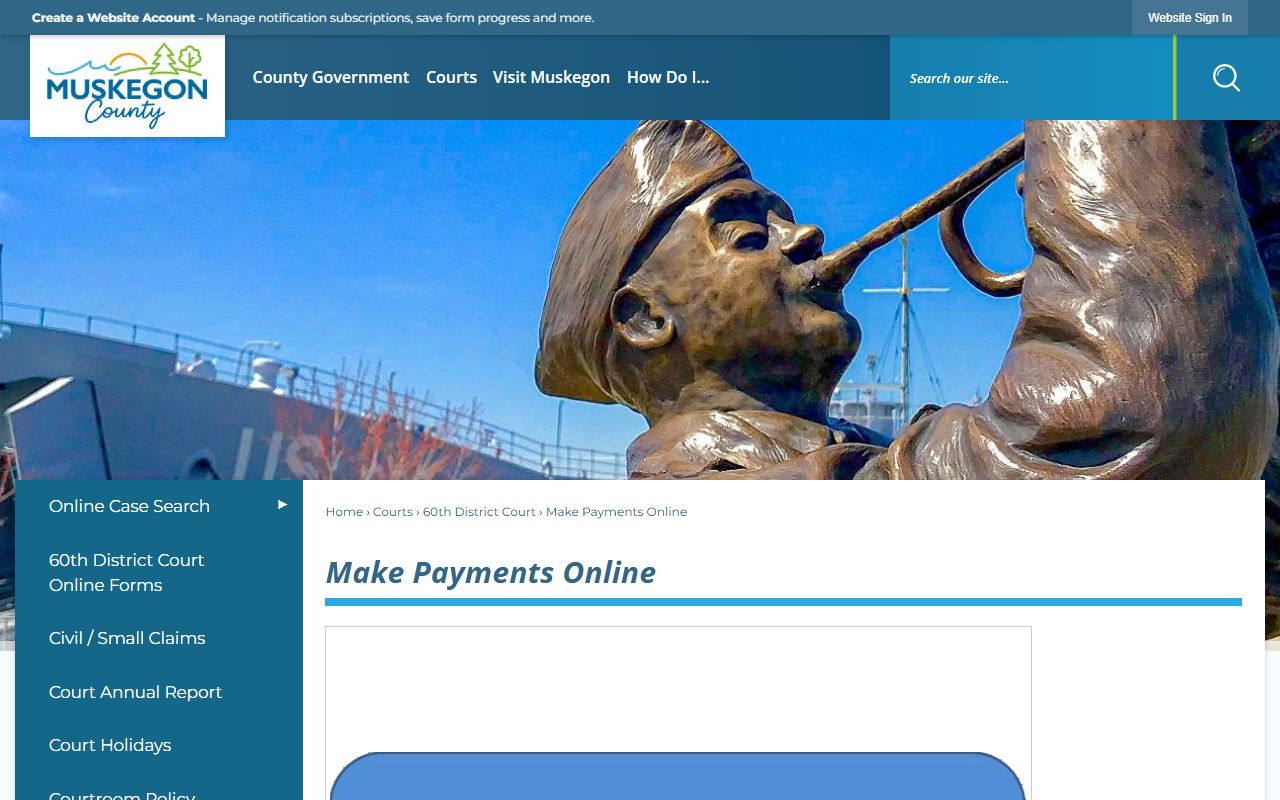
The page states plainly that bench warrants cannot be paid with a credit card, which is why a call to the court comes first. Follow the steps below in order.
- Identify the issuing court. Start with the 60th District Court for misdemeanor, traffic, ordinance, and failure-to-appear matters, plus bench warrants tied to district cases. Use Circuit Court Records for felony or circuit probation warrants.
- Search MiCOURT for the case number if you have one. If the person is already booked, check the post-arraignment jail report for the docket, judge, bond type, and bond.
- Call the court before paying anything. Bench warrants cannot be cleared with a credit card, so do not assume an online payment lifts the order.
- Ask about the bond type, the required appearance, the walk-in or surrender process, and whether an attorney can move to recall the warrant.
- Route municipal matters correctly. If a City of Muskegon, Muskegon Heights, Muskegon Township, or Norton Shores police case caused the warrant, use that agency's channel.
- Allow the court and jail systems time to update after the warrant clears, and keep every receipt and order.
Important: Talk with a lawyer before you surrender on a warrant, since bond, charges, and timing can change how the case turns out.
Muskegon County Warrant Costs and Fees
A warrant can carry costs beyond the underlying fine. When a person misses a hearing in a family or juvenile matter, the court adds a contempt service fee to cover serving the bench warrant. These fees stack when the failure repeats. The amounts come from the county fee schedule and apply on top of any bond the judge sets.
The county lists these charges on its Family and Juvenile fee schedule.
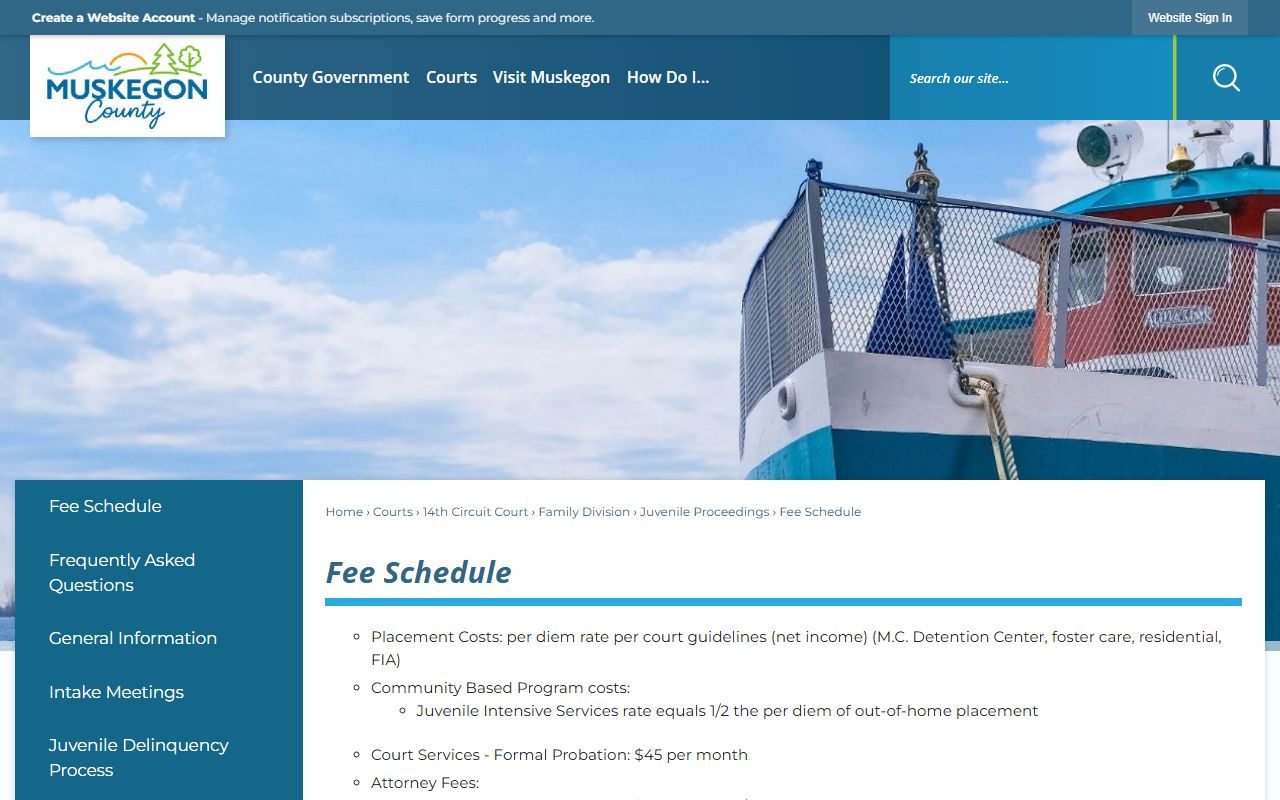
The schedule sets the bench-warrant contempt service fee and the lower fee charged for each later missed hearing. The two amounts appear below.
| Item | Amount |
|---|---|
| Bench-warrant contempt service fee (first) | $100 |
| Contempt service fee, each later hearing | $50 |
Note: These contempt fees apply to family and juvenile cases, while district criminal and traffic warrants carry their own separate costs set by that division.
Records Requests and Police Routing
When a warrant record is not visible online, a public-records request is the next tool. The Muskegon County Sheriff's Office handles records through its FOIA process, subject to law-enforcement exemptions. Some warrant and investigative details stay exempt while a case is open. A request should name the record, the person, and the dates as clearly as possible.
The sheriff explains this process on its Records Division FOIA page.
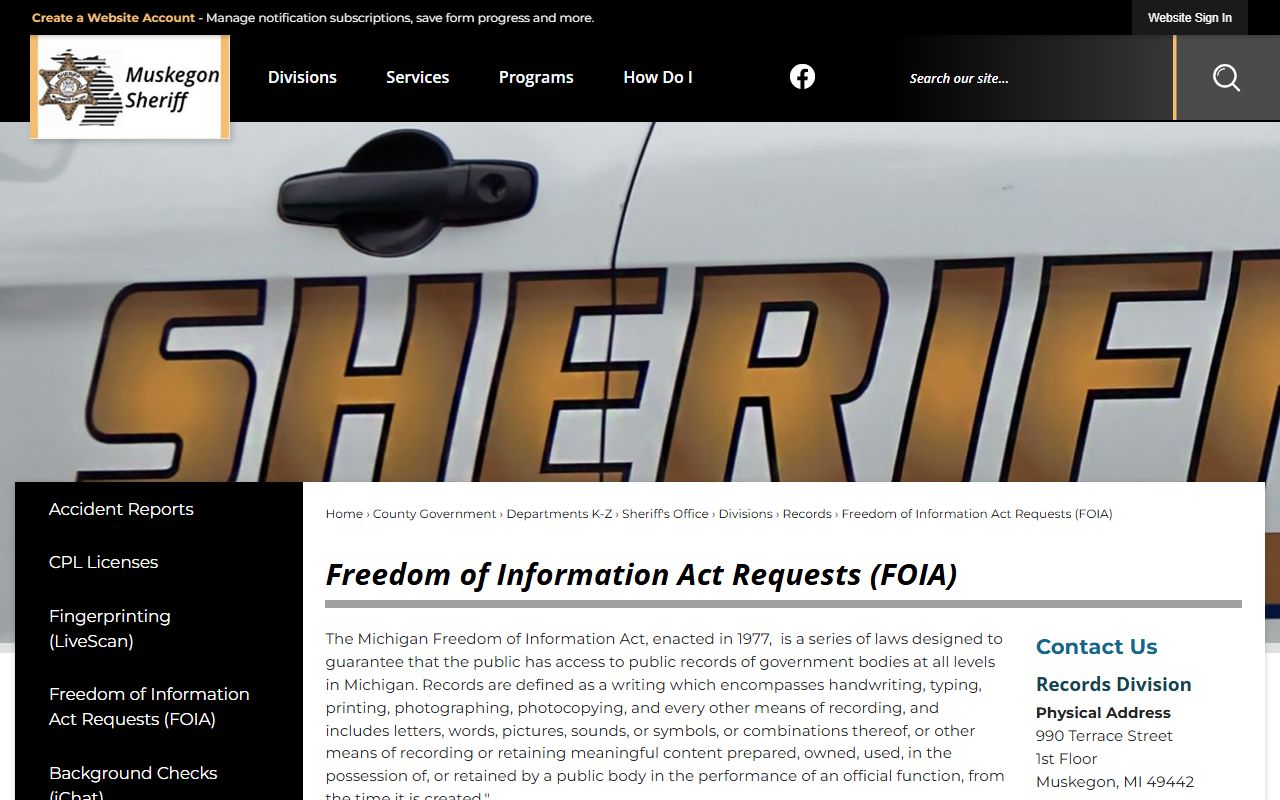
That page also directs requesters to the correct city police department when the incident happened inside a local municipality. Routing matters because the sheriff does not hold every agency's records. If the case belongs to City of Muskegon, Muskegon Heights, Muskegon Township, or Norton Shores police, the request goes to that department. For county departments, the online county form covers the sheriff, the prosecutor, the public defender, and other offices.
Residents can file through the county's online FOIA request form.
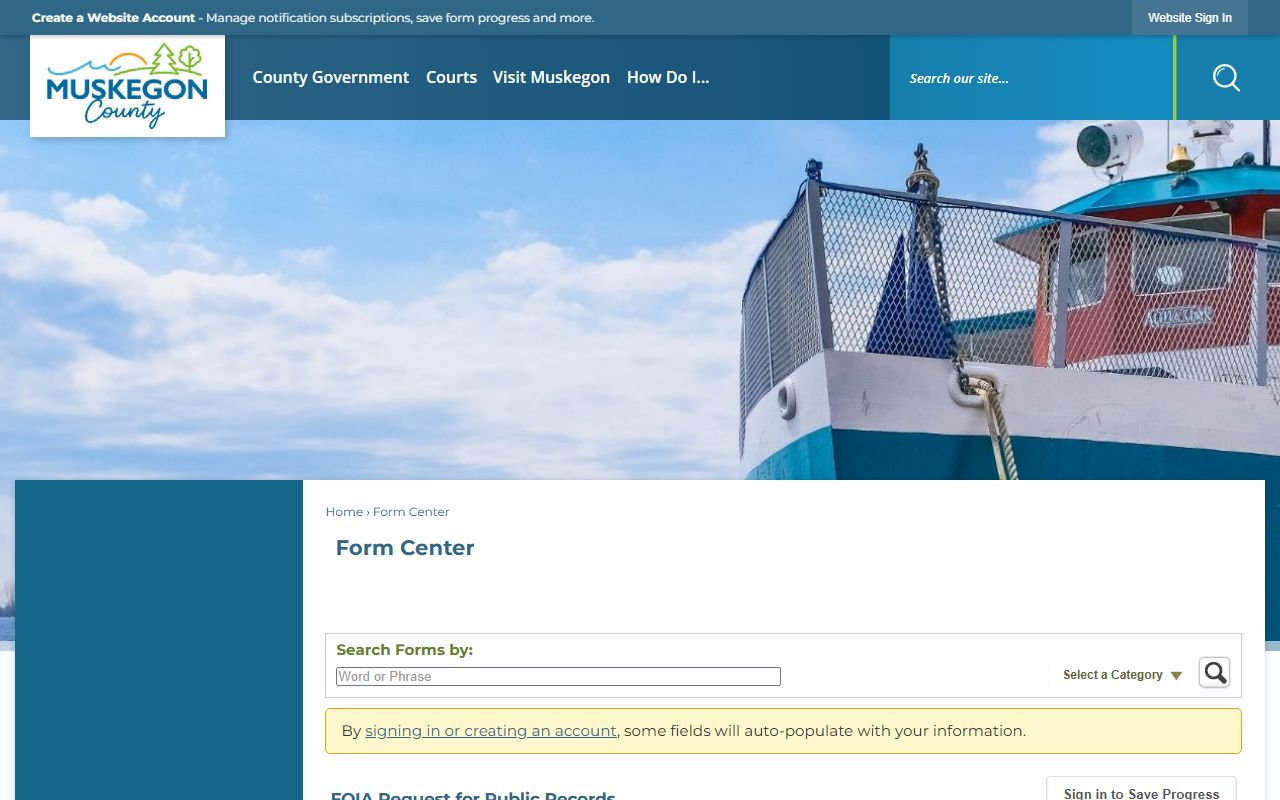
The form includes a department dropdown, requester contact fields, a description box, and a delivery-method choice. The county states that it processes records requests within five business days, with a possible ten-day extension.
Restricted Muskegon County Warrant Records
Not every warrant is open to the public. Search warrants are often sealed before they are served, which keeps an active investigation private. Juvenile warrants tie to family and juvenile cases, and those records carry tight access limits. Federal warrants sit outside the county system entirely and route through federal courts and the marshals.
Court rules, not just the county, set these limits. Michigan protects personal identifying information in court files, and sealed or set-aside matters stay out of ordinary public results. When a record is restricted, the court or the sheriff can explain what, if anything, is releasable. A direct call to the issuing court stays the most reliable path when the online trail runs cold.
A parole hold adds one more layer. Parole runs through the state corrections system, so a parole violation warrant may not appear in a county court file at all. The jail report can still flag it as a hold reason after an arrest, yet the fuller status sits with state supervision. When a warrant mixes a county charge and a state hold, expect to work with more than one office to sort it out. The court clears the county piece, and the supervising agent handles the parole side.