
What Is a Court Docket in Muskegon County
A court docket is the running list of everything that happens in a case. Each time a party files a document, a judge signs an order, or the court holds a hearing, the clerk adds a dated line to the docket. In Muskegon County, the docket is the backbone of the case record. It shows the case number, the parties, the charges or claims, and every event in the order it occurred. Reading a docket tells you where a case stands today and what step comes next.
A docket is not the full case file. The docket names each filing, but it does not hold the text of the motions, exhibits, or orders themselves. Those live in the full record at the clerk's counter or in the court's document system. Muskegon County spreads dockets across three trial courts. The circuit court keeps dockets for felony files after bindover, divorce, and larger civil suits. The district court keeps dockets for misdemeanors, traffic, small claims, and evictions. The probate court keeps dockets for estates, guardianships, and mental-health matters. A felony can show a district docket first and a circuit docket later.
Dockets update as a case moves, so the same file can look very different from one month to the next. A new filing, a rescheduled hearing, or a signed order each adds a fresh line. That is why the docket answers the two questions most people bring to the courthouse: what has happened so far, and what is set to happen next. For a pending case, the last few entries usually point to the next hearing date and the judge assigned to it. For a closed case, the final lines show the judgment, the sentence, or the order that ended the matter.
How to Find Muskegon County Dockets Online
Muskegon County dockets are searched through the same MiCOURT system that holds the case files. The county online case-search hub links to a circuit, district, and probate search, and each one opens the docket for a matching case. You do not need an account to read a public docket. The 14th Circuit Court page links to its case search, judges, and court policies.
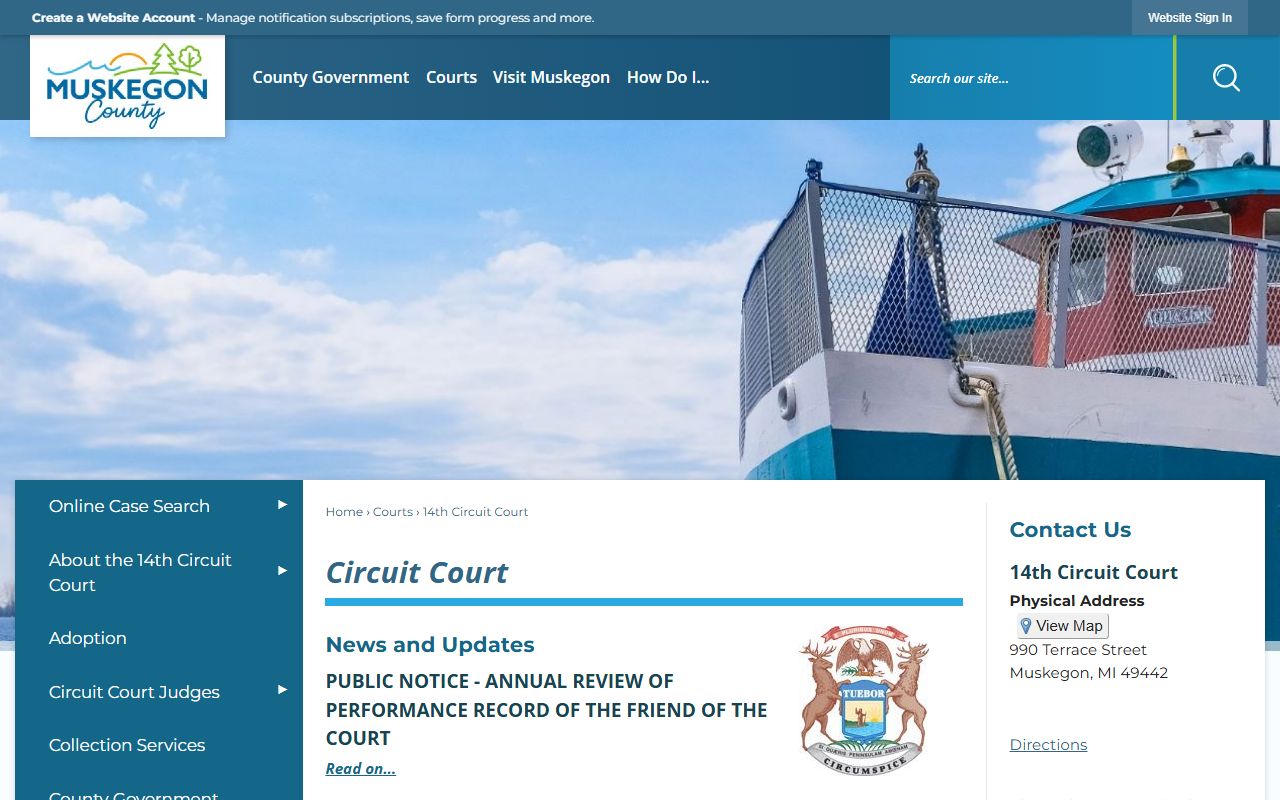
The circuit court is the trial court of general jurisdiction in Muskegon County, and its docket tracks the heaviest cases. A few steps pull a docket online:
- Open the county online case-search hub and choose Circuit, District, or Probate.
- Enter a party name or the case number on the MiCOURT search page.
- Select the matching case from the result list.
- Read the docket entries in date order to see filings, hearings, and orders.
If a docket does not appear online, the case may be older than the court's on-site range or closed to public view. Circuit files older than the on-site range sit in off-site storage and take at least five days to retrieve after an order through Circuit Court Records. Sealed and juvenile matters may not show at all. When the online docket stops short, a call or a visit to the court that owns the file fills the gap. The district court answers docket questions at 231-724-6294, and Circuit Court Records answers at 231-724-6251.
Sample Muskegon County Docket Entry
Each docket entry is a single dated line, and every line follows the same shape. Once you know what each part means, a long docket becomes easy to scan. Michigan court policy lets the public read case information online while limiting document images when protected data has not been redacted, so a docket may name a filing without offering it to download. The fields below appear on a typical Muskegon County docket entry.
| Field | What It Shows |
|---|---|
| Entry Date | The date the clerk recorded the filing, hearing, or order. |
| Event Type | The kind of action, such as arraignment, motion, hearing, order, or judgment. |
| Party Filing | The side that filed, shown as plaintiff, defendant, petitioner, or the court. |
| Docket Text | A short description of the filing or event, sometimes with a statute or form code. |
| Hearing Date | The scheduled date, time, courtroom, and judge for an upcoming event. |
| Disposition | The outcome tied to that step, such as granted, denied, dismissed, or sentenced. |
The event type is the heart of each line. A criminal docket moves through arraignment, pretrial, preliminary exam, motion, plea, and sentencing. A civil docket runs from complaint and answer through motions, hearings, and judgment. A probate docket opens an estate, appoints a fiduciary, and tracks accountings until the file closes. The disposition column then records how each step ended, which gives a quick read on the health of the case. Read the newest entries first when you only need the current status.
Note: A docket lists a filing by name, but Michigan policy may block the document image online until protected personal data has been redacted.
Courts That Publish Dockets in Muskegon County
Three Muskegon County courts publish docket information through MiCOURT, and each covers a different set of cases. The county hub is the front door to all three. Some events stay off the public docket. Juvenile matters, for example, may sit on the probate or family calendar without showing to the public. The 60th District Court page gives its jurisdiction, address, hours, and docket links.
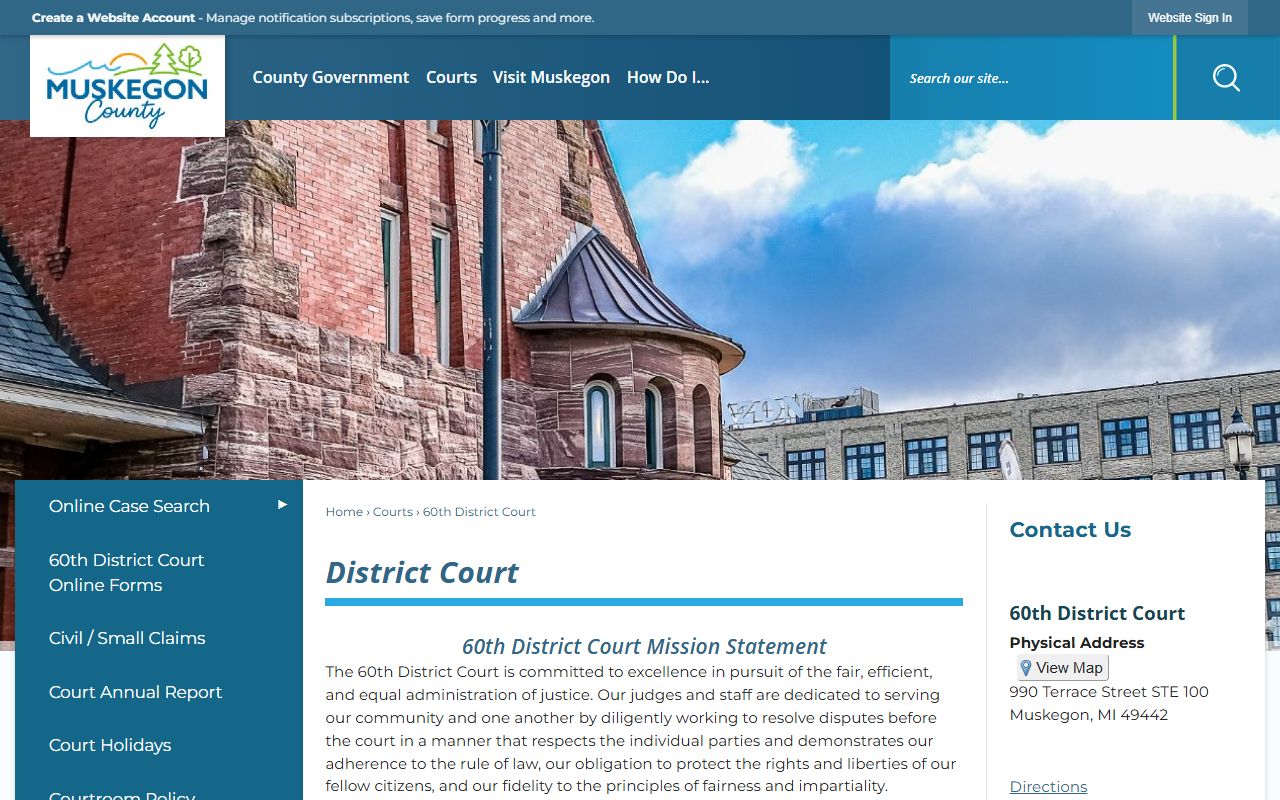
The district court hears the largest share of Muskegon County cases, so its docket is the busiest of the three. The courts divide docket coverage like this:
- 14th Circuit Court: dockets for felony files after bindover, divorce, custody, and civil suits over the district limit.
- 60th District Court: dockets for misdemeanors, traffic, civil claims of $25,000 or less, small claims, and evictions.
- Probate Court: dockets for estates, wills, guardianships, conservatorships, and mental-health matters.
- Family Division: divorce, paternity, support, and personal protection order events, with some juvenile matters kept private.
Felony cases explain why one event can touch two dockets. Every criminal case in Muskegon County is filed first at the district court, which handles the arraignment and the preliminary exam. If the judge finds probable cause, the case is bound over to the circuit court, where a new docket carries the plea, trial, and sentence. Watching both dockets gives the full timeline of a serious charge, from the first appearance through the final judgment. Misdemeanors are simpler, since they stay on the district docket from arraignment to sentencing.
Docket vs. Full Case Record
The docket and the full case record are two different things, and knowing the difference saves a wasted trip. The docket is a public index of events. The full record holds the actual documents behind those events. Most people can answer their question from the docket alone. A certified copy or a specific motion, though, means going to the file, which falls under Muskegon County court records at the clerk's counter.
| Docket | Full Case Record | |
|---|---|---|
| Format | List of dated entries | Full documents and exhibits |
| Access | Often online and free through MiCOURT | May need a counter visit or a fee |
| Content | Case number, parties, events, hearings | Motions, orders, transcripts, evidence |
| Use | Track case progress and next hearing | Legal review, certified copies, appeals |
Which one you need comes down to the task. To confirm a court date, read the parties, or follow an appeal, the docket is enough and it is free. To file your own paper, quote an order, or hand a judge a certified copy, you need the document from the full file. The clerk certifies court documents for a fee, and staff cannot certify a paper that a visitor carries in from outside. Planning around that difference keeps a simple errand from turning into two trips.
How to Read a Muskegon County Docket
Muskegon County dockets use shorthand that can puzzle a first-time reader. Case numbers end in a letter code that marks the court level and case type. OM often flags an ordinance or misdemeanor matter, SM a misdemeanor, and FH or FC a felony or circuit-level file. The judge column may read DC for a district court judge or CC for a circuit court judge. Learning these tags helps you tell a district docket from a circuit one at a glance.
The Probate Court page links to its case search, forms, fees, and payment tools.
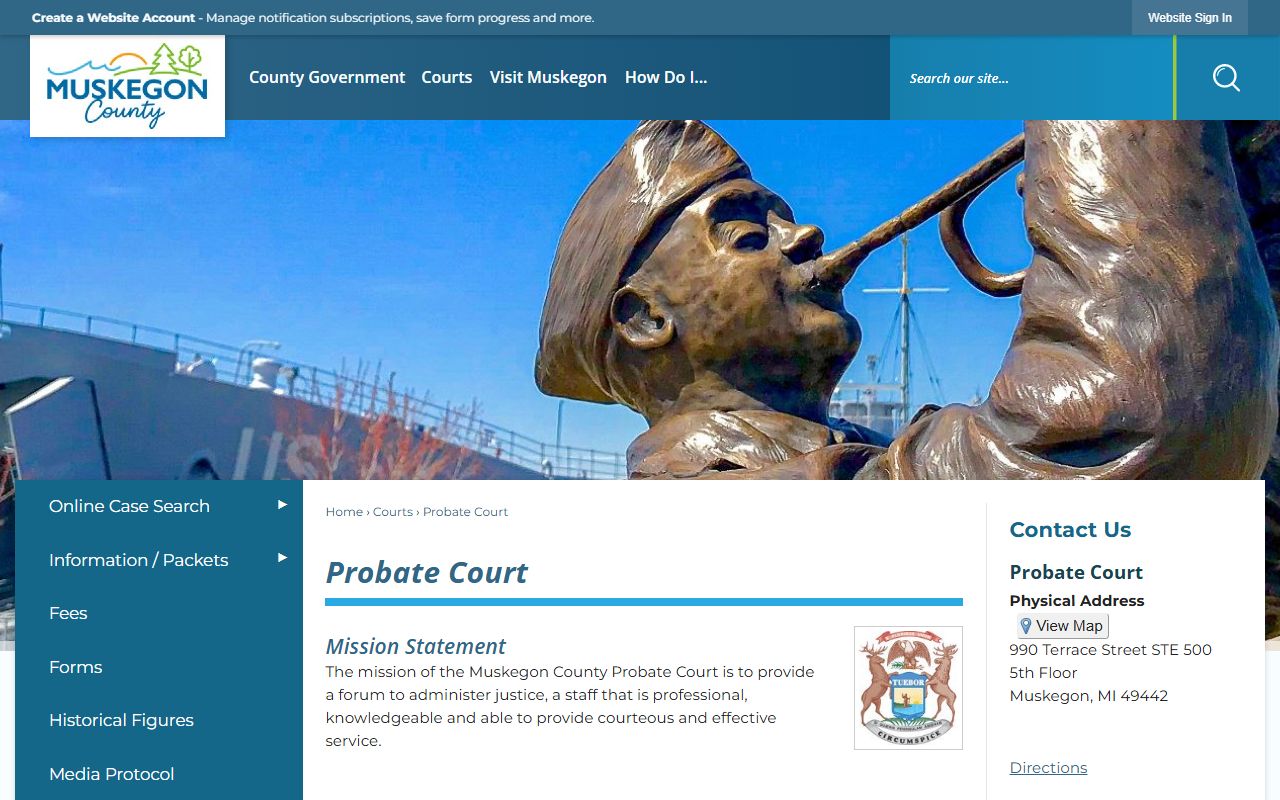
Probate dockets track estates and guardianships, and their entries follow the same dated format as the trial courts. Disposition lines tell you the outcome of a step. A docket may read pretrial, dismissed, bindover, sentenced, or closed. Bindover is worth watching, because it means a felony has cleared its district court preliminary exam and moved up to circuit court for trial and sentencing. When that happens, the district docket ends and a new circuit docket begins under a fresh case number, which the full criminal court record then follows to disposition.
A handful of terms turn up on nearly every Muskegon County docket. Learning them makes each line quicker to read:
- Docket
- The dated list of filings, hearings, orders, and events in a case.
- Motion
- A request asking the judge to issue an order.
- Bindover
- The transfer of a felony from district court to circuit court after a probable-cause finding.
- Disposition
- The current or final outcome of a charge or case.
- Continuance
- A postponement of a hearing or deadline to a later date.
Once the tags and terms make sense, a Muskegon County docket reads like a timeline. Each dated line marks a move in the case, and the last line shows where things rest today.