
Muskegon County Arrest Records and Court Charges
A Muskegon County arrest record captures the arrest event itself. It notes the person taken into custody, the arresting agency, and the booking that follows at the county jail. The arrest alone does not decide guilt, and it does not set the formal charges. That job belongs to the Muskegon County Prosecutor. After a review of the police work, the prosecutor decides which charges to file and enters them with the court clerk, where they become the court charge record.
The Muskegon County Sheriff's Office runs the jail and the booking process behind an arrest. Its pages link to the inmate search, tip submission, and records requests, but the formal charges are set later by the prosecutor, not by the arresting deputy.
The arrest record and the court charge record answer different questions. The booking side shows who is in custody right now, and that detail lives on the jail roster covered in the Muskegon County inmate records. The court charge record shows what the prosecutor formally filed and how each charge moves through the case. The full case file, with pleas, disposition, and sentence, sits in the Muskegon County criminal court records. Court charges after an arrest can differ from the offense written on the first booking sheet, because the prosecutor makes the final charging decision.
How to Find Muskegon County Arrest Records and Charges
Muskegon County arrest records and charges are found through a mix of court and sheriff tools. The court charge record is searched through the county Online Case Search hub, which links to the MiCOURT search for each court. The 60th District Court search shows misdemeanor charges and early felony events, while the 14th Circuit Court search shows felony charges after bindover. The sheriff's public jail reports add a quick view of charges tied to a current booking.
- Open the county Online Case Search hub and choose the court that fits the charge.
- Search the MiCOURT tool by defendant name or by case number.
- Open the case and read the full charge list.
- Check each charge for its code, its level, and its current status.
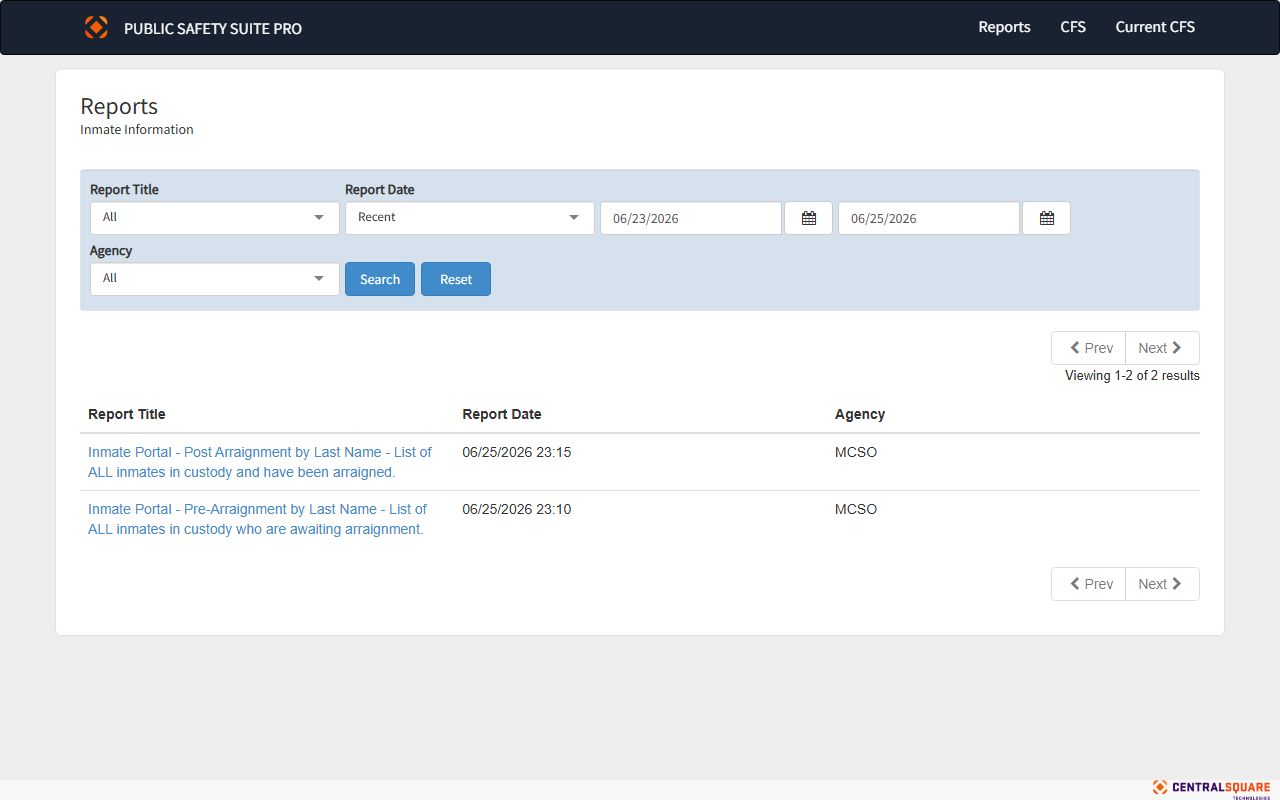
The Sheriff's public jail reports portal posts pre-arraignment and post-arraignment inmate reports. The pre-arraignment report is short and holds no charges, while the post-arraignment report adds the charges, the court docket, the judge, and the bond.
Not every charge shows up online right away. For a charge that has not posted yet, or for a file kept off site, the court counter and a phone call fill the gap. Circuit Court Records keeps felony criminal files from 2013 forward on site, and older files take at least five days to pull. When a record sits with a police agency rather than the court, a public-records request routes to the right office. If the arrest came from the City of Muskegon, Muskegon Heights, Muskegon Township, or Norton Shores, that request goes to the local department instead of the county sheriff.
How Muskegon County Charges Get Filed After an Arrest
The path from an arrest to a court charge follows a set order. First the arrest and booking happen. Then the prosecutor files a charging document, and that filing opens the court charge record. Michigan uses three main charging documents, and the one used depends on how serious the offense is. A complaint is the common start for a misdemeanor and for the first felony filing. An information is the formal felony charge filed in Circuit Court after a preliminary exam. An indictment, returned by a grand jury, is used for some serious felonies but is far less common in county practice.
| Complaint | Information | Indictment | |
|---|---|---|---|
| Filed By | Officer / Prosecutor | Prosecutor | Grand Jury |
| Common For | Misdemeanors | Many felonies | Serious felonies |
| Starts | The case | The case | The case |
In Muskegon County, the prosecutor holds the charging power. Assistant prosecutors represent the People at the 60th District Court, which handles every misdemeanor filing, and they carry felony cases into Circuit Court. The charges in the record trace back to that office, not to the deputy who made the arrest.
Muskegon County Charge Status and What It Means
Charges rarely stay frozen from arrest to verdict. As a case moves, the prosecutor can amend a charge, reduce it, add a new one, or drop it. A judge can dismiss a charge, and a plea deal can swap one charge for another. The record tracks every change with a dated entry, so the current status can differ from the charge on the first booking sheet.
| Status | What It Means |
|---|---|
| Pending | The charge is filed and the case is still open. No final outcome has been entered. |
| Amended / Reduced | The prosecutor changed the charge, often to a lower level as part of a plea or after review. |
| Dismissed | The court dropped the charge. It may be dismissed with or without the option to refile. |
| Nolle Prosequi | The prosecutor formally chose not to pursue the charge, ending it without a conviction. |
Charges vs. Convictions
A charge and a conviction are not the same, and the difference matters when reading an arrest or charge record. A charge is an accusation. It means the prosecutor believes there is enough evidence to bring the case. A conviction is a finding of guilt, entered by a plea or a verdict. Many charges never become convictions. They get reduced, dismissed, or dropped, and the record keeps that history.
| Charge | Conviction | |
|---|---|---|
| Stage | Accusation | Verdict or plea |
| Burden of Proof | Probable cause | Beyond reasonable doubt |
| Public Record | Yes | Yes |
Sealed vs. Expunged and Set-Aside Records
Some arrest and charge records leave public view over time. Michigan law calls the process a set-aside under MCL 780.621, though people often say expungement. A sealed record is hidden from public search but still kept by the court. A set-aside treats an eligible conviction as though it never happened for most public purposes. The Clean Slate laws also clear some convictions automatically after a waiting period, with no application needed.
| Sealed | Expunged / Set Aside | |
|---|---|---|
| Visibility | Hidden from public search | Treated as though it never happened for public searches |
| Law Enforcement | Limited access | Some agencies keep limited access |
| Eligibility | Set by statute or court order | Set by MCL 780.621 and the Clean Slate laws |
Muskegon County Charge Codes and Severity Levels
Each charge in the record ties to a specific Michigan statute or a local ordinance. The code tells you the exact offense, and a level tells you how serious it is. Michigan sorts adult offenses into felonies, misdemeanors, and civil infractions. A felony is the most serious and can carry more than a year in prison. A misdemeanor is generally punishable by up to a year in jail and is handled in District Court. A civil infraction, such as most traffic violations, is not a crime and carries fines rather than jail. One arrest can produce several separate charges, and each keeps its own code, level, and status.
The jail report is a fast way to read charges tied to a booking. It lists the offense code, a short offense name, the court docket, the bond type, and the judge. Charges seen in that report range from failure to appear and probation violation to felonious assault, retail fraud, and controlled-substance offenses. The report is handy, but it is not the full court file, so the case search still holds the last word on each charge.
Note: The suffix on a Muskegon County case number hints at the court and offense type, such as OM for an ordinance or misdemeanor matter and FH for a circuit-level felony.
Statewide Charge and Criminal History Lookups
Charges filed in Muskegon County can also surface in statewide systems. The Michigan Department of Corrections runs OTIS, the Offender Tracking Information System, which shows prisoners, parolees, probationers, and recent discharges across the state. It is free and searches by name or offender number. OTIS covers people under state supervision, so it will not list every county charge, and it drops most records within three years of a supervision discharge. A full statewide criminal history is held by the Michigan State Police and is not an open public search in the way a court docket is.
When a charge record is not online at all, the county Freedom of Information Act process can reach administrative and law-enforcement records that the public roster does not show. That path has limits. State law lets agencies withhold parts of a law-enforcement file, so a request may come back with pages redacted or exempt.
Background Check Considerations
A quick charge lookup is not a formal background check. Employers, landlords, and licensing agencies that act under the Fair Credit Reporting Act must order a screening from a company that follows federal rules. A public charge search shows what was filed, but it can miss sealed files, set-aside convictions, and charges held by another court. Use a self-service search to get oriented, then confirm the detail with the court.
Important: This site is not a consumer reporting agency under the Fair Credit Reporting Act, and its records cannot be used for employment, tenant, credit, or licensing decisions.
Restricted Charge Records in Muskegon County
Not every charge record is open to the public. Juvenile charges are handled by the Family Division and are usually nonpublic, even when a case search exists. Sealed and set-aside charges drop out of public results by law. Records that hold protected personal information, such as social security numbers, are redacted before release. Charges tied to an active investigation may be withheld until the case is filed, and some law-enforcement records carry their own exemptions under state law.